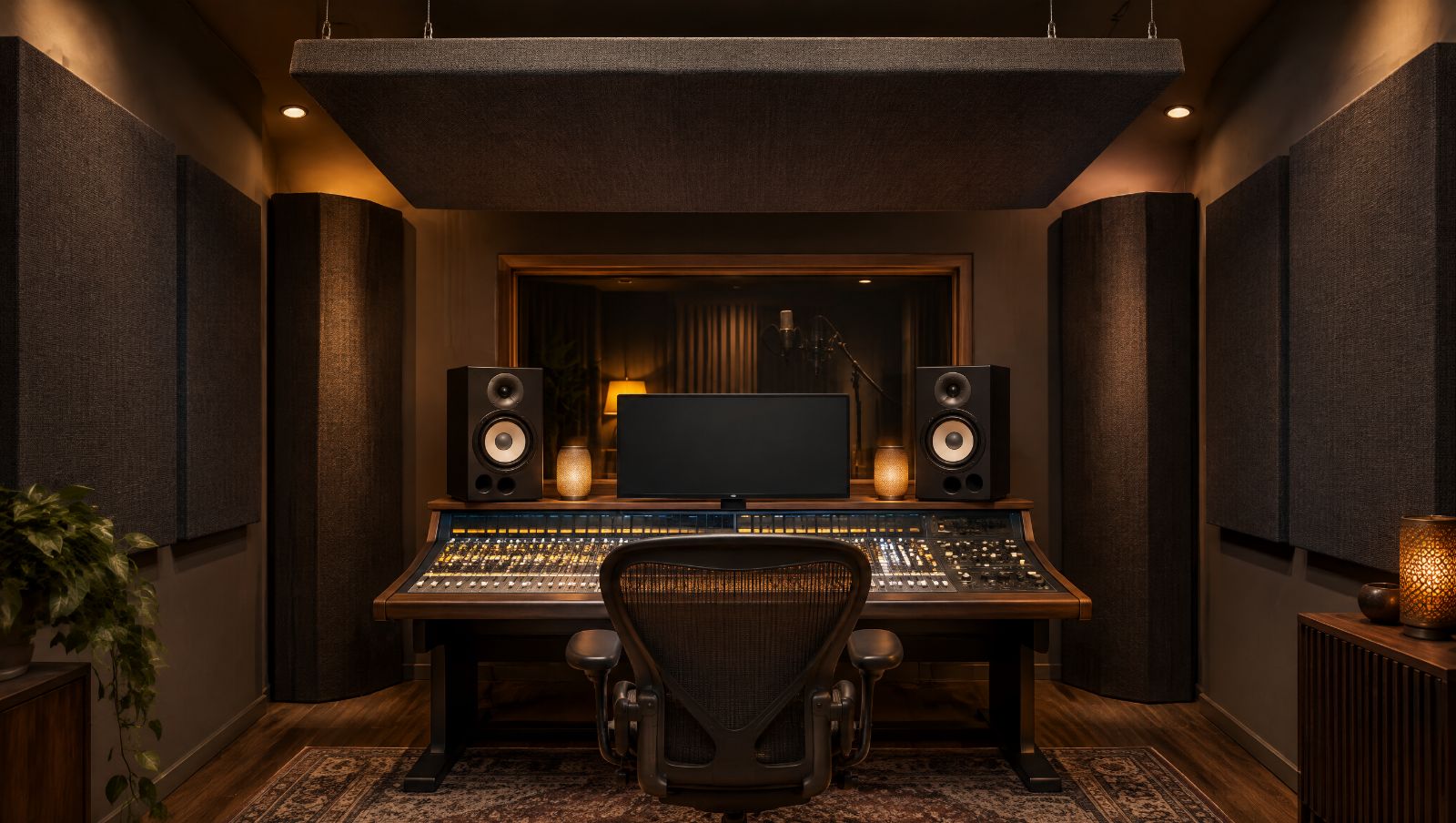
What usually goes wrong
- Mixes sound different everywhere else.
- Flutter echo between parallel walls.
- Bass build-up at the mix position.
The main noise sources are studio monitors, instruments and vocals. Sound bounces off hard walls, floors and ceilings, so it lingers and builds up. Absorbing panels soak up those reflections.
Where the panels go
- At the mirror points on side walls.
- A cloud above the mix position.
- 4 in traps in every corner you can reach.
- On the wall behind the listening position.
Mistakes to avoid
- Covering every wall in thin foam.
- Ignoring the corners.
- Putting the desk against the long wall when the short wall measures better.
Fire rating and codes
Residential, but treat the room as an equipment room: Class A materials and clear access to outlets.
Blocking sound between rooms
Panels make a room sound better, but they don’t stop sound passing through a wall. For that you need a wall assembly rated around STC 55, so you can record without traffic and neighbors, and play loud without complaints. Read about STC ratings and soundproofing.
Recommended
Panels that suit home studios
Learning center
14 guides for home studios
Acoustic panels for home studios: the complete guideWhat makes home studios noisy, which panels fix it, and how to plan treatment from start to finish.How many acoustic panels does a home recording studio need?A worked Sabine calculation for a typical home studio, with panel counts for small, typical and large rooms.Where to put acoustic panels in a home recording studioWhere panels do the most good in home studios, in priority order.Wall acoustics for home studiosHow walls behave acoustically in home studios and how to treat them with panels.Ceiling acoustics for home studiosClouds, baffles and ceiling tiles for home studios, and how much of the ceiling to cover.Choosing panel thickness for a home recording studio1, 2 or 4 inches: which thickness suits home studios and why.Reverberation time targets for home studiosThe reverberation time to aim for in home studios, and why it matters.What acoustic treatment costs for a home recording studioBudget estimates for treating a typical home studio, and where the money goes.Fabrics, colors and shapes for home studiosFabric types, colors and shapes that work in home studios.Fire ratings and code requirements for panels in home studiosFire ratings, occupancy rules and mounting requirements for panels in home studios.Installing acoustic panels in a home recording studioTools, hardware and step-by-step installation for panels in home studios.Common acoustic mistakes in home studiosThe errors we see most often in home studios, and how to avoid them.Soundproofing and STC ratings for home studiosWhen home studios need soundproofing, which STC rating to aim for, and how to get there.Home recording studio acoustics checklist and FAQA one-page checklist and answers to common questions about home studio acoustics.